


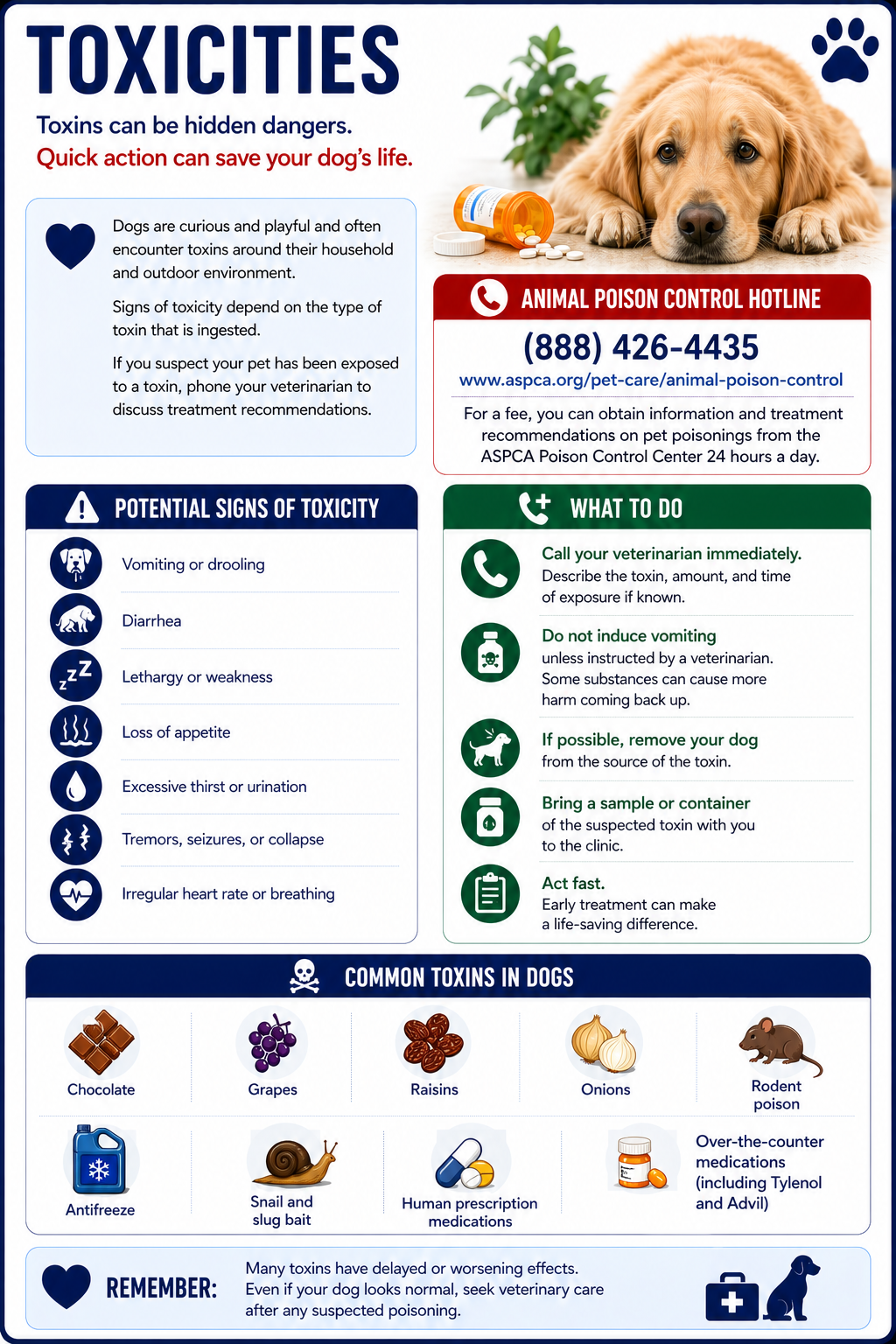

Toxins can be hidden dangers.
Quick action can save your dog’s life.
Dogs are curious and playful and often encounter toxins around their household and outdoor environment.
Signs of toxicity depend on the type of toxin that is ingested.
If you suspect your pet has been exposed to a toxin, phone your veterinarian to discuss treatment recommendations.
ANIMAL POISON CONTROL HOTLINE
(888) 426-4435
www.aspca.org/pet-care/animal-poison-control
For a fee, you can obtain information and treatment recommendations on pet poisonings from the ASPCA Poison Control Center 24 hours a day.
POTENTIAL SIGNS OF TOXICITY
• Vomiting or drooling
• Diarrhea
• Lethargy or weakness
• Loss of appetite
• Excessive thirst or urination
• Tremors, seizures, or collapse
• Irregular heart rate or breathing
WHAT TO DO
• Call your veterinarian immediately.
Describe the toxin, amount, and time of exposure if known.
• Do not induce vomiting unless instructed by a veterinarian.
Some substances can cause more harm coming back up.
• If possible, remove your dog from the source of the toxin.
• Bring a sample or container of the suspected toxin with you to the clinic.
• Act fast.
Early treatment can make a life-saving difference.
COMMON TOXINS IN DOGS
• Chocolate
• Grapes
• Raisins
• Onions
• Rodent poison
• Antifreeze
• Snail and slug bait
• Human prescription medications
• Over-the-counter medications (including Tylenol and Advil)
REMEMBER:
Many toxins have delayed or worsening effects. Even if your dog looks normal, seek veterinary care after any suspected poisoning.