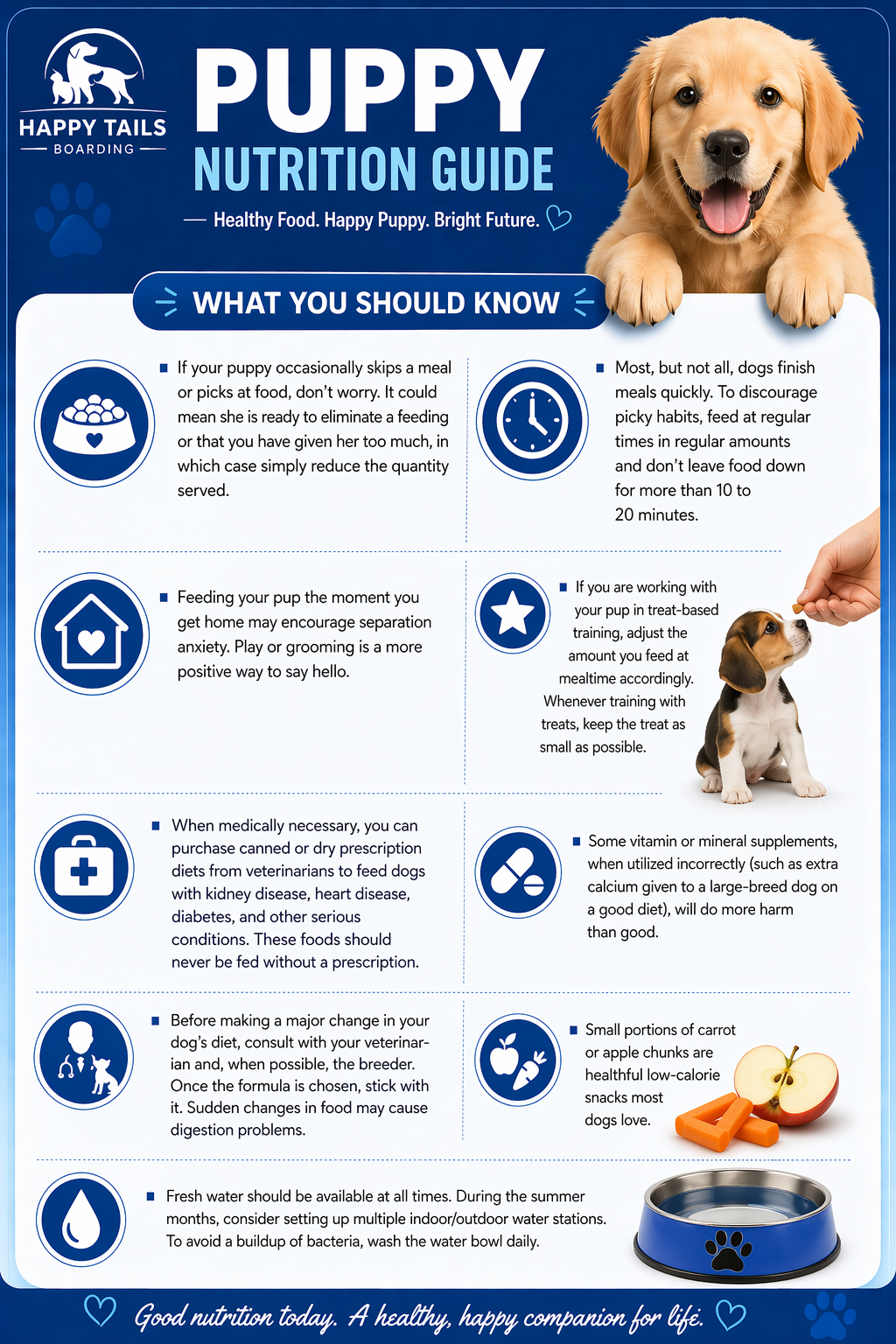
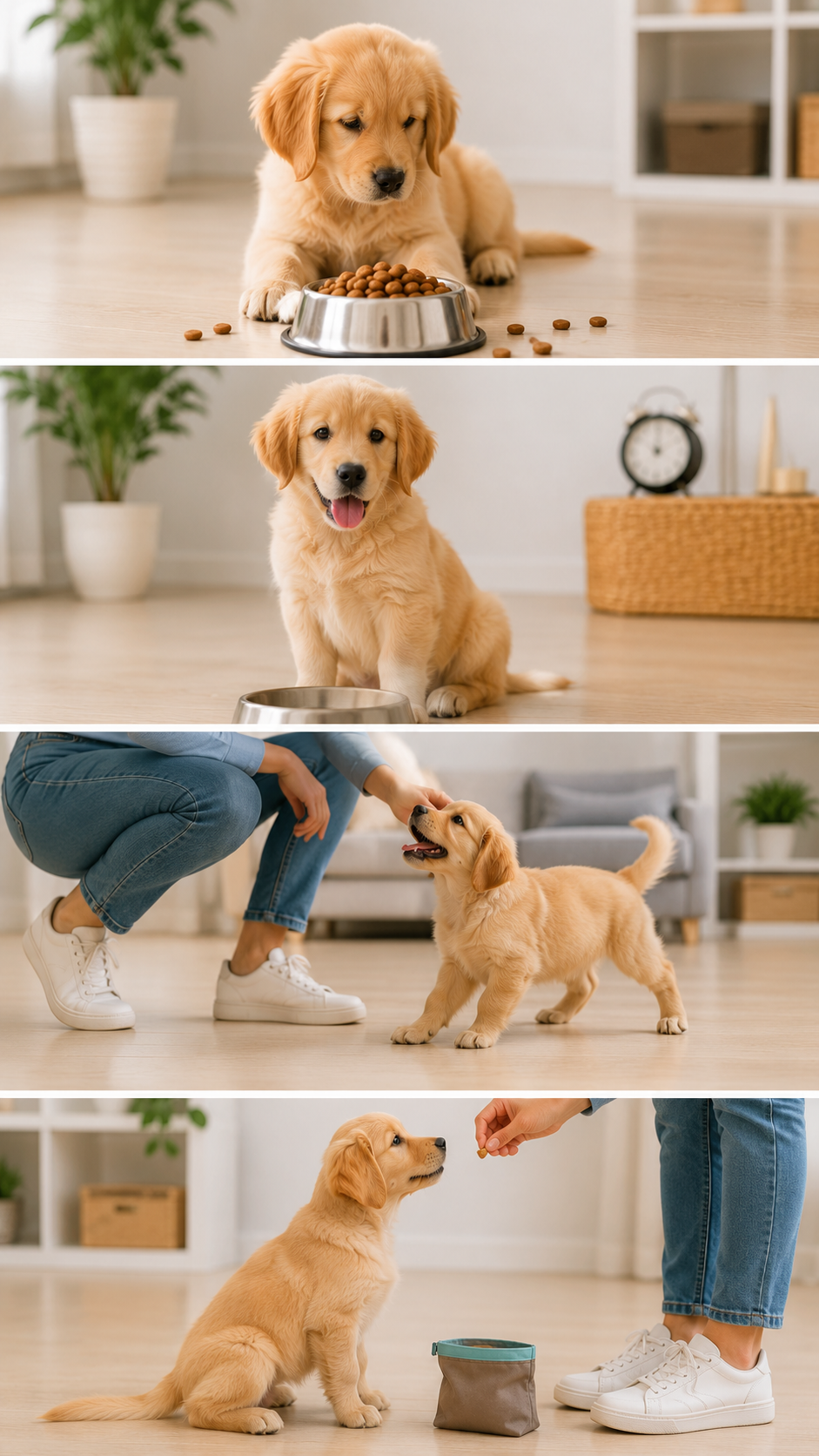
If your puppy occasionally skips a meal or picks at food, don’t worry. It could mean she is ready to eliminate a feeding or that you have given her too much, in which case simply reduce the quantity served.
Most, but not all, dogs finish meals quickly. To discourage picky habits, feed at regular times in regular amounts and don’t leave food down for more than 10–20 minutes.
Feeding your puppy the moment you get home may encourage separation anxiety. Play or grooming is a more positive way to say hello.
If you are working with your pup in treat-based training, adjust the amount you feed at mealtime accordingly. Whenever training with treats, keep the treats as small as possible.
When medically necessary, veterinarians may prescribe special canned or dry diets for dogs with kidney disease, heart disease, diabetes, and other conditions. These foods should only be used with veterinary guidance.
Some vitamin or mineral supplements, when used incorrectly (for example, extra calcium for a large-breed dog already eating a complete diet), may do more harm than good.
Before making a major change in your dog’s diet, consult your veterinarian and, when possible, the breeder. Once you choose a formula, remain consistent with it. Sudden food changes may cause digestive problems.
Small portions of carrots or apple slices can be healthy low-calorie snacks many dogs enjoy.
Fresh water should always be available. During hot months, consider multiple water stations indoors and outdoors. Wash water bowls daily to help prevent bacterial buildup.
💙 Good nutrition today. A healthy, happy companion for life.