


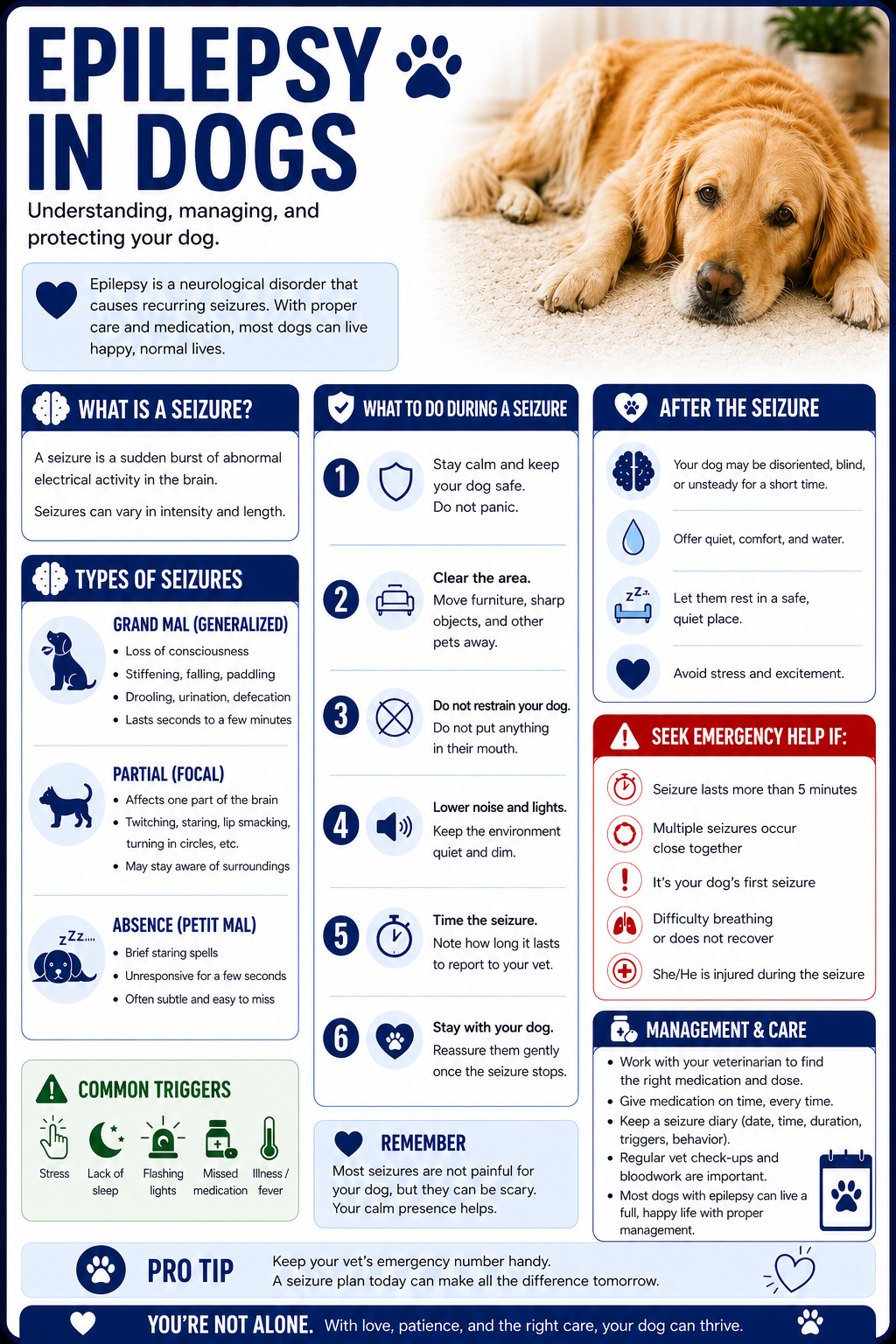

💙 Understanding, managing, and protecting your dog.
Epilepsy is a neurological disorder that causes recurring seizures. With proper care and medication, many dogs can live long, happy lives.
🧠 What is a seizure?
A seizure is a sudden burst of abnormal electrical activity in the brain.
Seizures can vary in intensity and duration.
⚡ Types of seizures
Grand mal (generalized)
• Loss of consciousness
• Stiffening, falling, or paddling movements
• Drooling, urination, or defecation
• Usually lasts seconds to a few minutes
Partial (focal)
• Affects one area of the brain
• Twitching, staring, lip smacking, or circling
• Dogs may remain aware
Absence seizures
• Brief staring episodes
• Unresponsive for a few seconds
• Can be subtle and easy to miss
🚨 What to do during a seizure
- Stay calm and keep your dog safe
- Clear the area
Move furniture, sharp objects, and other pets away - Do not restrain your dog
Never put anything in their mouth - Reduce noise and lights
Keep the environment quiet and dim - Time the seizure
Track how long it lasts - Stay nearby
Gently reassure your dog after the seizure ends
❤️ After the seizure
• Your dog may seem confused or unsteady for a short time
• Offer water and comfort
• Allow rest in a quiet area
• Avoid excitement or stress
🆘 Seek emergency help if
• The seizure lasts longer than 5 minutes
• Multiple seizures happen close together
• It is your dog’s first seizure
• Breathing problems occur
• Your dog is injured during the seizure
⚠️ Common triggers
• Stress
• Lack of sleep
• Flashing lights
• Missed medication
• Illness or fever
🩺 Management and care
• Work with your veterinarian to find the correct treatment plan
• Give medication on schedule
• Keep a seizure journal with dates and duration
• Attend regular veterinary checkups
💡 Pro tip: Keep your veterinarian’s emergency number available and have a seizure plan ready.
🐶 Your calm presence helps more than you think.