


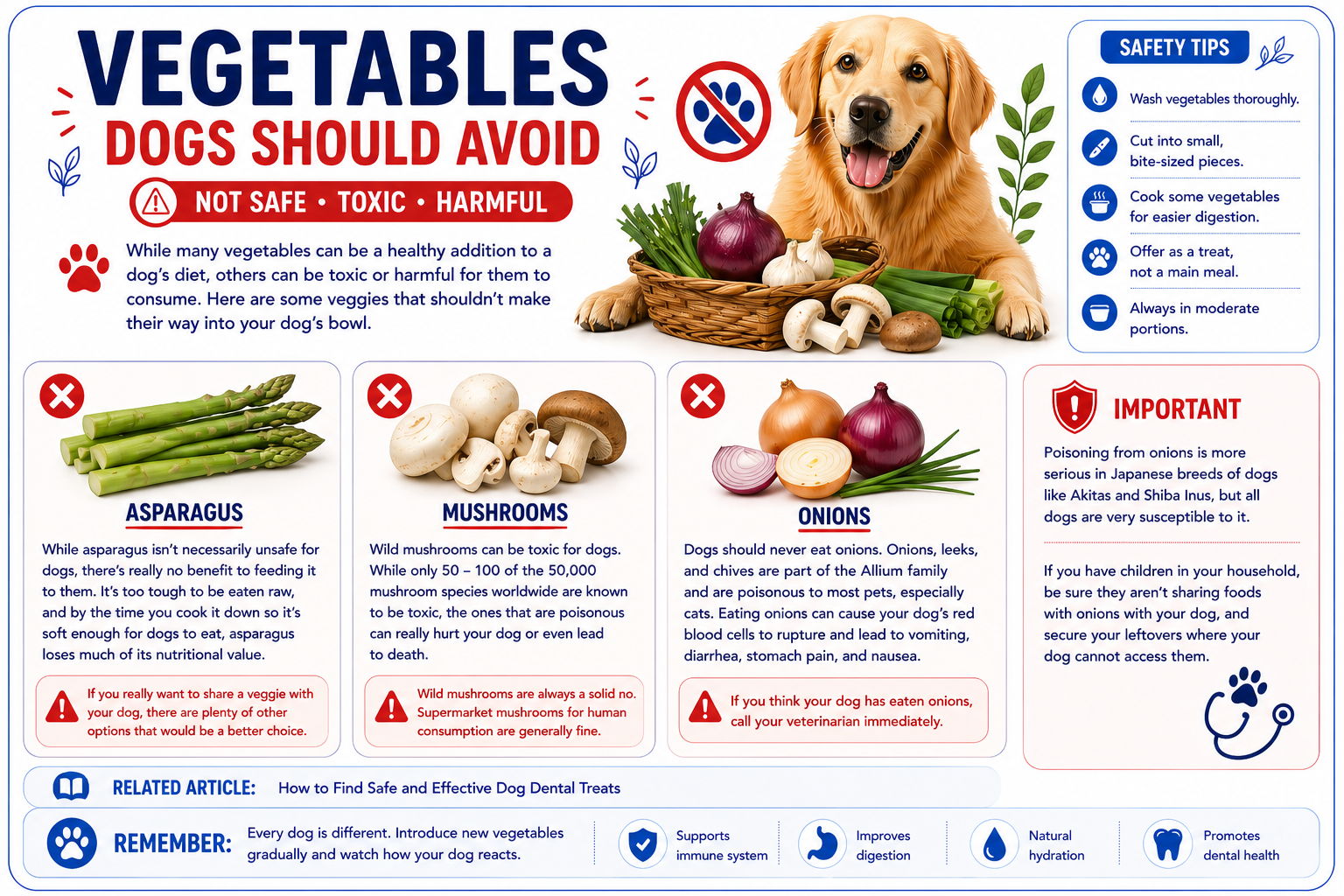

⚠️ While many vegetables can be a healthy addition to a dog’s diet, others can be toxic or harmful for them to consume. Here are some veggies that shouldn’t make their way into your dog’s bowl.
🚫 Asparagus
While asparagus isn’t necessarily unsafe for dogs, there’s really no benefit to feeding it to them. It’s too tough to be eaten raw, and by the time you cook it down so it’s soft enough for dogs to eat, asparagus loses much of its nutritional value.
⚠️ If you really want to share a veggie with your dog, there are plenty of other options that would be a better choice.
🚫 Mushrooms
Wild mushrooms can be toxic for dogs. While only 50–100 of the 50,000 mushroom species worldwide are known to be toxic, the ones that are poisonous can really hurt your dog or even lead to death.
⚠️ Wild mushrooms are always a solid no. Supermarket mushrooms for human consumption are generally fine.
🚫 Onions
Dogs should never eat onions. Onions, leeks, and chives are part of the Allium family and are poisonous to most pets, especially cats. Eating onions can cause your dog’s red blood cells to rupture and lead to vomiting, diarrhea, stomach pain, and nausea.
⚠️ If you think your dog has eaten onions, call your veterinarian immediately.
📋 Safety Tips
💧 Wash vegetables thoroughly.
🔪 Cut into small, bite-sized pieces.
🍲 Cook some vegetables for easier digestion.
🍽️ Offer as a treat, not a main meal.
⚖️ Always in moderate portions.
🚨 Important
Poisoning from onions is more serious in Japanese breeds of dogs like Akitas and Shiba Inus, but all dogs are very susceptible to it.
If you have children in your household, be sure they aren’t sharing foods with onions with your dog, and secure your leftovers where your dog cannot access them.
📖 Related Article: How to Find Safe and Effective Dog Dental Treats
💡 Remember: Every dog is different. Introduce new vegetables gradually and watch how your dog reacts.
🛡️ Supports immune system
🩺 Improves digestion
💧 Natural hydration
🦷 Promotes dental health